
 Better Water for
a Better Life
Better Water for
a Better Life

Is Your Water Softener the Reason Your Water Pressure Feels Low? Insights from a Pentair Water Softening Company in St. Charles, Illinois
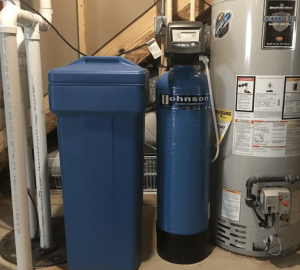
Now and then, some issues inside a water softener can slow water flow. Are you wondering what these issues are? If so, you’ve come to the right place. Below, this Pentair water softening company in St. Charles, Illinois is going to explain why your softener is causing low pressure, and what you can do to restore it.
Where does a water softener sit in your home’s plumbing setup?
A water softener is installed in the path of your home’s main water line. Instead of letting water run straight through the pipes, it sends the water through a tank filled with tiny resin beads. These beads attach to the calcium and magnesium in hard water and replace them with sodium or potassium. Because the water must move through this extra tank, the softener adds a small amount of resistance to the flow.
In a softener that is the right size for the home and well maintained, this slight resistance is not even noticeable. But if the softener is too small for your household’s water demand or if the resin tank is clogged, the water will have a harder time moving through. That is when you may see slower flow at the faucets.
If you are confused about the softener size, it’s best to talk to your local Pentair water softening company in St. Charles, Illinois.
What situations make a water softener lower your water pressure?
The most common situation is that the softener is too small for the home. If the softener can’t adjust to your household’s water demand, the water is squeezed as it moves through the resin tank. That squeeze can appear as weaker pressure throughout the house.
Another common situation is buildup inside the softener. Minerals or sediment can settle in the resin bed and water can’t move through as easily when the beads are coated. This can result in slow-running faucets.
Other problems inside the softener like salt bridges or clogged drain/brine lines can also restrict water flow.
Even bad installation can be a problem. If the pipes going in or out of the softener are too small or don’t match the softener’s connections, there could be a flow bottleneck.
How can you tell if the softener is causing the low pressure?
If you think your softener is the reason, the easiest test is to switch it into bypass mode. Most softeners have a bypass valve that sends water straight into your home without passing it through the tank. If your pressure returns to normal as soon as you turn on the bypass, take it as a sign that the softener is slowing the flow.
If the pressure stays low even in bypass mode, the softener probably is not the problem. In that case, the issue can be a pressure regulator or even the city’s incoming water.
Tips to prevent pressure problems
First, you need to make sure that the softener is the right size for your home. When a softener matches your water use and hardness level, it can regenerate efficiently and move water through the tank smoothly.
Regular maintenance is also very important. The resin bed, control valve, brine tank, drain line and even the screens and seals inside the unit all need to be inspected from time to time. You should also routinely check the drain line coming from the control valve. There should not be any water running through it unless the softener is in the middle of a regeneration cycle.
Keeping up with basic maintenance can go a long way. Over months and years, minerals and iron can stick to the resin beads, the control valve, the injector, the brine tank or other parts of the softener. Proper cleaning is needed to remove this type of buildup and keep water moving freely.
Don’t underestimate the importance of professional installation. The inlet and outlet must be connected properly and the pipes feeding the softener should match the softener’s size so water can move smoothly. When installed and maintained by a Pentair water softening company in St. Charles, Illinois, the system shouldn’t slow down your water at all. Ignoring these details, though, can make pressure problems more likely.
Looking for a Pentair water softening company in St. Charles, Illinois?
Are you ready to get in touch with a professional Pentair water softening company in St. Charles, Illinois that can diagnose and fix low-pressure issues? If so, Johnson Water Conditioning is the top choice. Contact us today to get in touch with our team.