
 Better Water for
a Better Life
Better Water for
a Better Life

Is Softened Water Safe for People on a Low-Sodium Diet? Insights from a Pentair Water Softening Company in Vernon Hills, Illinois
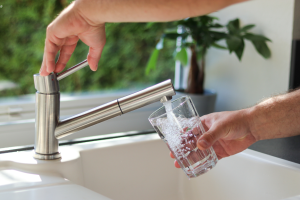
If you or someone in your household follows a low-sodium diet, you may have questions about softened water. One concern some homeowners have is whether water softeners add sodium to your drinking water — and, if they do, whether that extra sodium makes the water unsafe for you.
This situation can feel confusing when health concerns are part of your decision. Looking for some clarity? This Pentair water softening company in Vernon Hills, Illinois is going to explain how the softening process works, and where sodium enters the picture.
How does water softening work and where does sodium come in?
Hard water contains minerals like calcium and magnesium. You can safely drink these minerals, but they are the reason scale builds up in your pipes and appliances.
A traditional water softener addresses this problem through a process called ion exchange.
The softener contains a tank filled with thousands of tiny resin beads that carry sodium. Calcium and magnesium trade places with the sodium on the beads as water flows through the tank. The hardness minerals stay behind in the tank and the softened water continues through your home.
The system does not pour sodium into your water supply or mix salt directly into the water you use every day. Sodium enters your water through the ion-exchange process and its amount depends entirely on your water’s hardness.
During regeneration cycles, the system flushes the resin beads with a salt solution so they can release collected hardness minerals and recharge with sodium. An experienced Pentair water softening company in Vernon Hills, Illinois can explain this process to you so there are no unanswered questions on your mind.
How much sodium is in softened water?
The hardness of the incoming water causes the sodium level to vary from home to home. Softer incoming water needs less sodium, while harder water needs more.
In most cases, water softeners add only a minimal amount of sodium. Estimates commonly show that removing one grain per gallon of hardness adds about eight milligrams of sodium per liter of water. For many households, that is roughly 20 to 40 milligrams of sodium in an eight-ounce glass of softened water.
Even if your water is harder, softened water usually adds much less sodium than what you get from everyday foods like bread, dairy products, soups and processed meals.
Comparing these numbers with dietary guidelines really puts them into perspective. Most health organizations recommend limiting sodium intake to no more than 2,300 milligrams per day, with lower targets around 1,500 milligrams for people with certain health conditions. In that context, softened water contributes only a small amount to your daily sodium intake.
Considerations for people on strict low-sodium diets
Although softened water is generally safe for most people, you may prefer to limit sodium exposure wherever possible, even in small amounts.
Many households use softened water throughout the home and get a different source for drinking and cooking. You could keep one tap unsoftened or install a separate drinking water system (e.g., a reverse osmosis system) at your kitchen sink. With this setup, you get to enjoy all the benefits of softened water without any concern about sodium in what you drink and cook with every day.
There is no single water treatment solution that works for everyone. Factors like your local water quality and your personal health needs can influence which setup is best for you. A professional Pentair water softening company in Vernon Hills, Illinois can test your water and explain your best options.
Looking for a Pentair water softening company in Vernon Hills, Illinois?
Are you ready to consult with a knowledgeable Pentair water softening company in Vernon Hills, Illinois that can answer all your water-related questions? If so, our experts at Johnson Water Conditioning are just a call away. Whether you are concerned about sodium, water hardness or overall water quality, we are here to answer your questions and help you find the right solution for your home. Contact us today.