
 Better Water for
a Better Life
Better Water for
a Better Life

How Big Should a Water Softener Be for a Family of Four? Insights from a Pentair Water Softening Contractor in Wauconda, Illinois
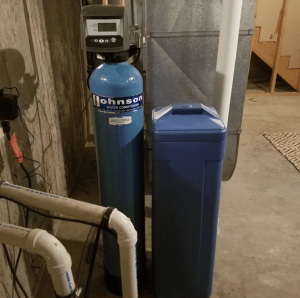
Hard water is a common issue for many homes in Northern Illinois. But a correctly sized water softener can prevent most of the common hard water problems. But how large should a water softener be for your household’s needs?
Below, this Pentair water softening contractor in Wauconda, Illinois is going to explain the basics of water softener sizing, and what size softener is typically best for a family of four.
How is water softener size calculated?
Water softeners are sized based on grain capacity. This number represents how many hardness minerals the system can remove from the water before it needs to regenerate. Regeneration is the cleaning process that flushes the collected minerals from the resin bed so the softener can continue softening water.
You need to be familiar with your system’s capacity if you want to know whether it can handle a household’s daily demand. A higher grain capacity means the system can remove more hardness before regeneration is required. A lower capacity system will reach its limit more quickly and need to regenerate more often.
An experienced Pentair water softening contractor in Wauconda, Illinois will start the sizing process by estimating how much water a home uses each day. Water use varies from household to household, though national averages provide a helpful starting point.
The average American uses roughly 82 gallons of water each day. That number includes water used for showers, dishwashing, laundry, cooking and cleaning. In a household with four people, daily water usage generally comes in at about 300 gallons.
The next step is determining the hardness level of the home’s water supply. Hardness is measured in grains per gallon (GPG). This measurement tells contractors how much calcium and magnesium are present in the water, and it can change depending on local groundwater conditions. When daily water usage is multiplied by the hardness level, that is how you know how many grains of hardness must be removed each day.
For example, consider a home where the water hardness measures 10 GPG. If that household uses about 300 gallons of water per day, multiply that number by the hardness level of 10 grains per gallon. The result equals 3,000 grains. In other words, the water softener must remove about 3,000 grains of hardness minerals every day to supply consistently soft water.
An experienced Pentair water softening contractor will perform a water test to get to these numbers. The contractor may test hardness levels directly at the home or use regional water data. This is so the selected water softener can handle the home’s demand without regenerating too frequently.
What happens when the water softener is the wrong size?
A water softener that is too small may regenerate frequently to keep up with household demand. This can increase salt usage and reduce overall efficiency. When regeneration happens too frequently, the water softener also experiences additional wear.
On the other hand, a water softener that is much larger than necessary may not regenerate at the most efficient intervals. While the home will still receive soft water, the softener may not operate as effectively as it could.
A professional Pentair water softening contractor in Wauconda, Illinois can evaluate a home’s water hardness and daily water usage to identify the appropriate grain capacity.
Looking for a Pentair water softening contractor in Wauconda, Illinois?
Are you looking for a professional Pentair water softening contractor in Wauconda, Illinois that can help you find the right system for your home? If so, Johnson Water Conditioning is here to help. Our team helps homeowners test their water, determine the proper softener size, and install reliable Pentair systems designed for long-term performance. Contact us today to learn more about choosing the right water softener for your home.