
 Better Water for
a Better Life
What Size Water Softener Do I Need for My Home? A Pentair Water Softening Company in St. Charles, Illinois Explains
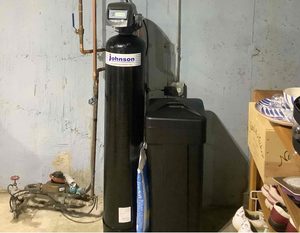
Choosing the right water softener size depends on more than the number of people living in your home. Water hardness, daily water use, iron or manganese levels, and regeneration settings can all affect the capacity you need.
Below, this Pentair water softening company in St. Charles, Illinois is going to explain how water softeners are sized, which household factors matter most, and why testing the water is an important first step.
What Does Water Softener Size Mean?
Water softener size usually refers to the amount of hardness the system can remove before regeneration is needed. This capacity is commonly expressed in grains.
A knowledgeable Pentair water softening company in St. Charles, Illinois can use your water test results and household demand to determine an appropriate capacity rather than choosing a system based on household size alone.
How Does Water Hardness Affect Softener Size?
The harder the water, the more calcium and magnesium the softener must remove.
Water hardness is often measured in grains per gallon, or GPG. A home with higher hardness requires more softening capacity to treat the same amount of water as a home with lower hardness.
Testing provides the actual hardness level needed for a more accurate calculation.
How Does Household Water Use Affect the Calculation?
Water usage determines how many gallons the softener needs to treat over a given period.
A larger household often uses more water, but the number of residents is only a starting point. Laundry habits, bathing patterns, appliances, and other routines can change daily demand.
For homeowners in the St. Charles, Illinois area, using realistic water consumption along with measured hardness gives a better picture of the capacity the system needs.
How Is Daily Softening Demand Calculated?
A basic starting point is to multiply the home’s daily water use by the hardness level in grains per gallon.
For example, a household using 250 gallons per day with water measuring 10 GPG creates approximately 2,500 grains of hardness-removal demand each day.
That number is not necessarily the softener size you should purchase. The system also needs enough capacity to operate efficiently between regeneration cycles.
Does Iron Affect Water Softener Sizing?
It can.
Certain forms of dissolved iron can add to the workload placed on a water softener. Manganese can also affect sizing calculations in some water supplies.
If iron or manganese is present, the water should be evaluated before selecting equipment. Depending on the type and concentration, additional treatment may be more appropriate than relying on a softener alone.
Can a Water Softener Be Too Small?
Yes.
An undersized softener may reach its capacity quickly and regenerate more frequently to keep up with household demand. That can increase salt and water use and place additional demands on the equipment.
If the system cannot keep pace during periods of high use, homeowners may also notice hard-water symptoms before the next regeneration.
Can a Water Softener Be Too Large?
Bigger is not automatically better.
A system that is substantially oversized may not operate at the most appropriate regeneration intervals for the household. Proper sizing balances usable capacity, water demand, hardness level, and efficient regeneration.
Your Pentair water softening company in St. Charles, Illinois can consider those factors when recommending equipment.
Do the Number of Bathrooms Matter?
Yes, but bathrooms are only one part of the calculation.
The number of bathrooms can help estimate potential peak flow and household demand. However, two homes with the same number of bathrooms may use very different amounts of water.
Household size, fixture use, water hardness, and other water-quality conditions should also be considered.
Why Should I Have My Water Tested Before Choosing a Softener?
Water testing removes much of the guesswork from sizing.
It can identify hardness and other water conditions that may influence the equipment recommendation. Testing is especially useful with private well water or when homeowners are unsure of their actual hardness level.
At Johnson Water Conditioning, we test the water and evaluate household needs before recommending a softening system so the equipment is matched to the conditions it will treat.
Looking for a Pentair Water Softening Company in St. Charles, Illinois?
The right water softener size depends on water hardness, daily usage, household demand, regeneration needs, and other water-quality factors. A professional Pentair water softening company in St. Charles, Illinois can test your water and calculate the capacity that fits your home.
At Johnson Water Conditioning, we provide Pentair water softening systems and water-quality guidance based on each household’s needs. Contact us to have your water evaluated and determine the appropriate softener size for your home.